
Section 1983 litigation against police, jails and the governments behind them.
We represent people whose constitutional rights were violated by officers acting under color of law: excessive force, false arrest, malicious prosecution, fabricated evidence, unlawful searches, and deliberate indifference in custody. We plead the federal claim and the state-law claims together, protect the notice deadlines first, and build the record that qualified immunity and Monell require.
Or call (718) 484-7510. English, Russian and Spanish in-house.
Cases built to be tried, not only settled
A Section 1983 case is decided by the record: the footage, the reports, the officers' own words under oath. We prepare every matter as if it will reach a jury, because the qualified immunity motion, the municipality's settlement position and the trial itself all turn on the same evidence.
Claims we litigate
Each practice page sets out the constitutional standard, the controlling authority, the defenses that will be raised, and the state-law claim that usually travels with it.

Excessive force
Objective reasonableness under Graham v. Connor, judged on the totality of the circumstances.
Read →
False arrest
An arrest without probable cause for any offense, and the accrual rule of Wallace v. Kato.
Read →
Malicious prosecution
After Thompson v. Clark, a prosecution that ended without a conviction is enough.
Read →
Fabricated evidence
The fair-trial claim, which can lie even where probable cause existed.
Read →
Unlawful search and entry
Homes, cars, phones and bodies, and the 2026 emergency-aid decision.
Read →
Retaliation
Arrests for speech, recording and protest, and the Nieves exception.
Read →
Jail and prison claims
Force, medical care and failure to protect, and the PLRA's exhaustion rule.
Read →
Federal officers
ICE, CBP and other federal agents, where Section 1983 does not reach.
Read →
What a plaintiff must prove
Section 1983 creates no rights of its own. It supplies a remedy when a person acting under color of state law deprives someone of a federal right. Every complaint we file is organized around the same elements, and every defense we expect is answered in the pleading, not after the motion to dismiss.
A person
An individual officer, or a municipality under Monell. A State and its agencies are not "persons."
Acting under color of state law
Exercising authority that exists only because of state law, on or off duty.
Deprived the plaintiff of a federal right
A right secured by the Constitution or federal law, measured by the standard that governs that right.
And caused the injury
Personal involvement for each officer; a policy or custom that was the moving force for the municipality.
The three questions that decide most cases

Qualified immunity
Was the right clearly established when the officer acted? After Zorn v. Linton (2026) the answer turns on precedent close to the facts. It never protects the municipality.
Read →
Municipal liability
No respondeat superior. The city answers only for its own policy, custom, or deliberately indifferent failure to train, which must be pleaded with facts.
Read →
The criminal case
A conviction can bar a claim that would imply its invalidity. A dismissal opens malicious prosecution. A plea needs advice before it is taken.
Read →
Damages and fees
Compensatory, nominal and punitive damages against officers, and fee-shifting to a prevailing plaintiff under 42 U.S.C. § 1988.
Read →
The litigation
Notice, pleading, the motion to dismiss, discovery, the immunity appeal, summary judgment and trial, with what happens at each stage.
Read →
Federal agents
After Egbert v. Boule, the Bivens remedy is nearly closed. The Federal Tort Claims Act and its two-year administrative claim usually carry the case.
Read →Four states, four notice regimes, one federal claim
The federal claim borrows each state's personal injury period. The state-law claims against the government have their own notice rules, and those run first.
 NY
New York
- Notice of claim
- 90 days
- State-law suit
- 1 yr 90 days
- Section 1983
- 3 years
 NJ
New Jersey
- Tort claims notice
- 90 days
- Tort claims suit
- 2 years
- Section 1983
- 2 years
 FL
Florida
- Pre-suit notice
- 3 years
- State-law suit
- 4 years
- Section 1983
- 4 years
 PA
Pennsylvania
- Written notice
- 6 months
- State-law suit
- 2 years
- Section 1983
- 2 years
General rules, current as of November 2026. Accrual, tolling and the identity of the agency can move a deadline earlier. Limitations calculator →
Recent decisions that changed the analysis
Published Supreme Court decisions in other people's cases, and what each means for a claim filed today.
Zorn v. Linton
U.S. Supreme Court · March 23, 2026 · per curiamReversed a denial of qualified immunity for a wristlock on a passively resisting protester: no precedent placed the question "beyond debate."
Qualified immunity →Barnes v. Felix
U.S. Supreme Court · May 15, 2025 · unanimousRejected the "moment of threat" rule. Force is judged on the totality of the circumstances, including what led up to it.
Excessive force →Case v. Montana
U.S. Supreme Court · January 14, 2026 · unanimousA warrantless emergency-aid entry into a home requires an objectively reasonable basis, not probable cause.
Unlawful search →Olivier v. City of Brandon
U.S. Supreme Court · March 20, 2026 · unanimousHeck does not bar a suit for purely prospective relief despite a prior conviction under the same ordinance.
Heck →Chiaverini v. City of Napoleon
U.S. Supreme Court · 2024Probable cause for one charge does not defeat a malicious prosecution claim as to a separate, baseless charge.
Malicious prosecution →Thompson v. Clark
U.S. Supreme Court · 2022Favorable termination requires only that the prosecution ended without a conviction. No affirmative indication of innocence.
Malicious prosecution →Litigators with a criminal defense practice down the hall
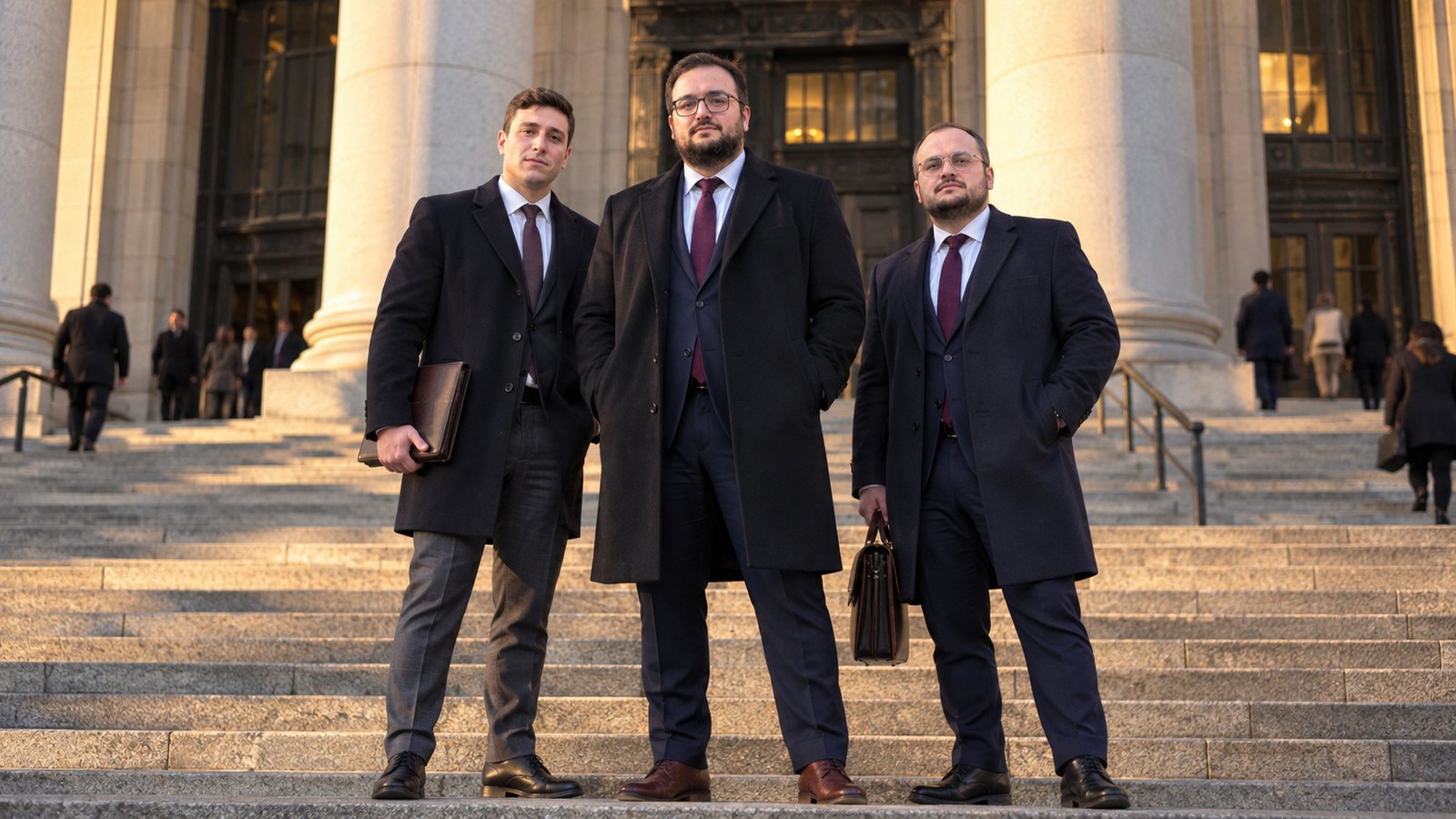
The civil claim and the criminal charge come out of the same arrest. Mikhail Usher, Alexander Susi and Mitchell Bromberg handle both, in the state and federal courts of New York, New Jersey, Florida and Pennsylvania. Mr. Usher founded the firm in 2013 and has more than 15 years of practice; together the firm's attorneys bring over 20 years of collective experience.
- We protect the shortest deadline first, then investigate, then decide what to file.
- We obtain body-worn camera footage, 911 audio and disciplinary histories before they are lost.
- We tell clients where qualified immunity or the criminal record is a real obstacle.



Latest from the blog
Practice notes on the decisions and rules that change how a Section 1983 case is pleaded, noticed and tried.
After Zorn v. Linton: pleading force against a passive resister
Zorn did not change the force standard. It raised the price of a vague complaint. How we plead and defend passive-resistance cases now.

Barnes v. Felix and the whole encounter
The moment-of-threat rule is gone. What a force case now asks for in discovery, and how the officer's deposition is organized around it.

An ACD can be a favorable termination: Brill v. Ulster County
The Second Circuit overruled Singleton in light of Thompson v. Clark. What an ACD now preserves, what it does not, and the open accrual question.
Charge by charge: Chiaverini and Thompson v. Clark
Probable cause for one charge does not defeat a claim on another. How Chiaverini and Thompson v. Clark change the way a prosecution claim is pleaded.
Common questions
What is a Section 1983 claim?
42 U.S.C. § 1983 lets a person sue anyone who, acting under color of state law, deprived them of a right secured by the Constitution or federal law. In practice it is the statute behind most lawsuits against police officers, corrections officers and the municipalities that employ them: excessive force, false arrest, malicious prosecution, unlawful searches, fabricated evidence and deliberate indifference in jails. The elements page sets out what must be proved.
How long is the limitation period?
Section 1983 borrows the state's personal injury period: three years in New York, two years in New Jersey and Pennsylvania, and four years in Florida. The state-law claims that usually travel with it have much shorter notice requirements, as short as 90 days in New York and New Jersey. The deadlines page sets them out state by state.
Does qualified immunity end most cases?
It ends some. An officer is immune from damages unless the conduct violated a right that was clearly established at the time, and the Supreme Court has applied that test strictly, including twice in 2026. It does not protect a municipality, it does not apply to claims for injunctive relief, and New York City's 2021 law removed it as a defense to the City-law claim against NYPD officers. The qualified immunity page explains how we plead around it.
Do you take referrals from other lawyers?
Yes. Criminal defense lawyers send us matters where the arrest or the prosecution itself was the problem, and we coordinate so that nothing in the civil case affects the criminal one. We also act as co-counsel. The referrals page explains how we work with referring counsel, subject to the fee-division rules that apply.
What does a consultation cost?
Nothing. If we take the matter, we work on a contingency fee confirmed in a written retainer before we begin. Court filing fees and case expenses are separate from the legal fee and are explained in the retainer.
Do you publish your results?
No. This site discusses published court decisions in other people's cases. We do not advertise our own settlements or verdicts, and we do not estimate the value of a case on a website.

Discuss the matter with counsel.
A confidential conversation with an attorney. We identify the constitutional claims the facts support, the right defendants, the defenses that will be raised, and the first deadline that applies. If the matter belongs with another firm, we say so.
(718) 484-7510If a criminal charge is open, we coordinate with defense counsel before any statement is taken. English, Russian and Spanish in-house. Contingency fee, confirmed in a written retainer.